
Design JournalMaster Bedroom
Designing a Master Bedroom That Feels Like a True Retreat
A calm bedroom starts with balance. Learn how wardrobe planning, ceiling layers, and material choices can make a master suite feel larger and more restful.
April 20266 min read
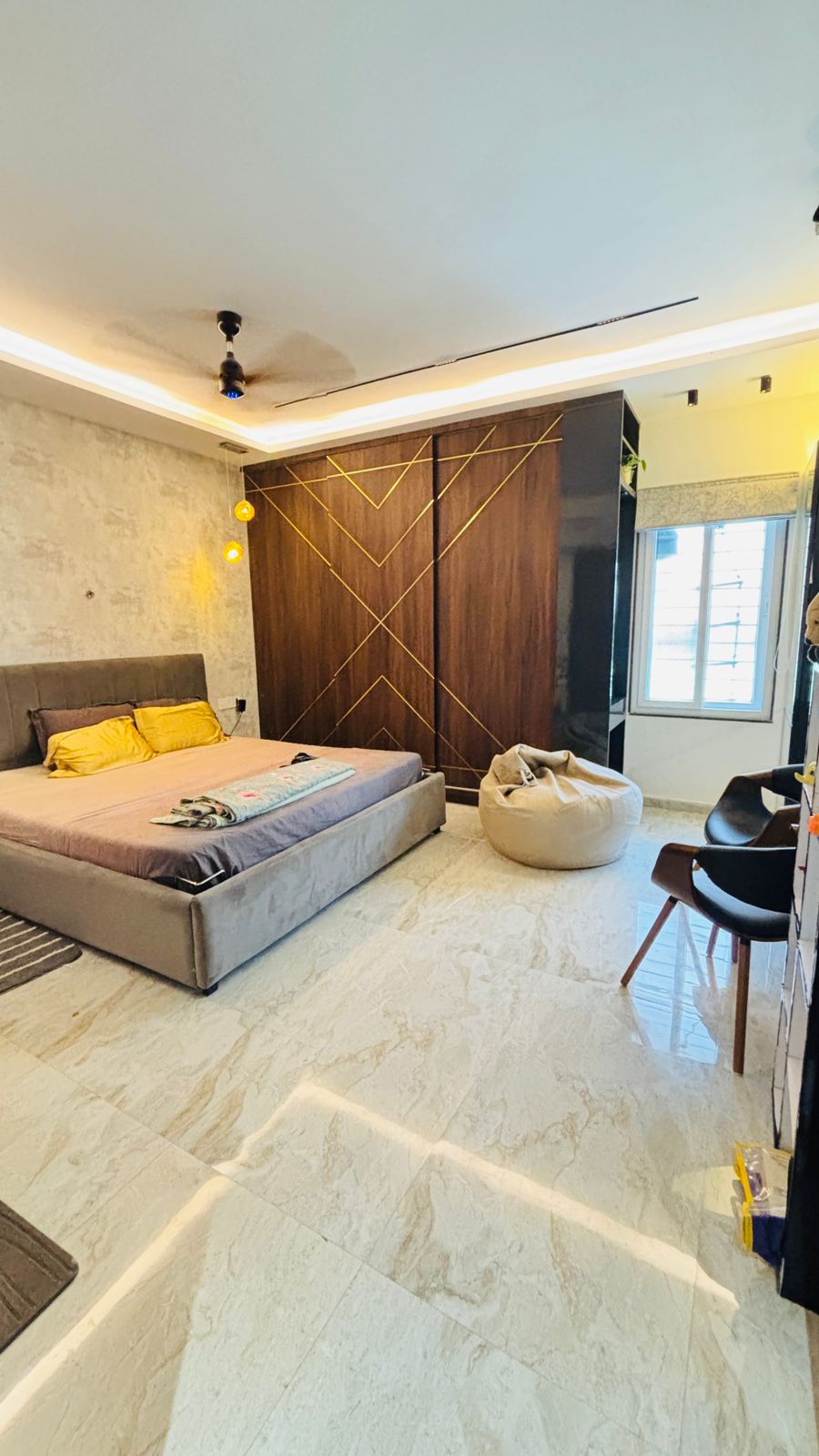
Master bedrooms work best when storage, lighting, and the bed wall are planned as one visual composition. The room should feel restorative without losing elegance or function.
Start with circulation, not decoration
A premium bedroom feels calm when movement is easy. We begin with the bed position, wardrobe clearance, and the natural walking path so the room feels open even with generous storage.
Once the circulation is right, the rest of the design can become more expressive without overwhelming the room.
This is why the first drawings we prepare are always about scale and flow. A master suite that supports easy movement will feel restful even before the finishes are selected, because the architecture itself is already doing the quiet work of comfort.
Use lighting to soften the architecture
Warm cove lighting, bedside layers, and concealed wardrobe illumination create a softer visual rhythm. This helps the bedroom feel quieter at night and more elevated during the day.
A room like this does not need dramatic contrast. It needs a lighting plan that gently separates the bed wall, wardrobe facade, and vanity area so each zone feels intentional without becoming visually busy.
- Use warm white tones for a restful atmosphere.
- Keep the ceiling composition simple and balanced.
- Mirror finishes and glossy surfaces should be used sparingly.
Let materials carry the mood
Material selection has a direct effect on how a bedroom feels at the end of the day. Wood grains, matte laminates, upholstered accents, and soft textiles create a quieter atmosphere than high-gloss surfaces.
We often combine one stronger feature, such as a textured bed wall or a floating side table, with calmer surrounding finishes so the room keeps its premium character without losing its sense of rest.
More Stories
Continue reading
Wardrobe Design
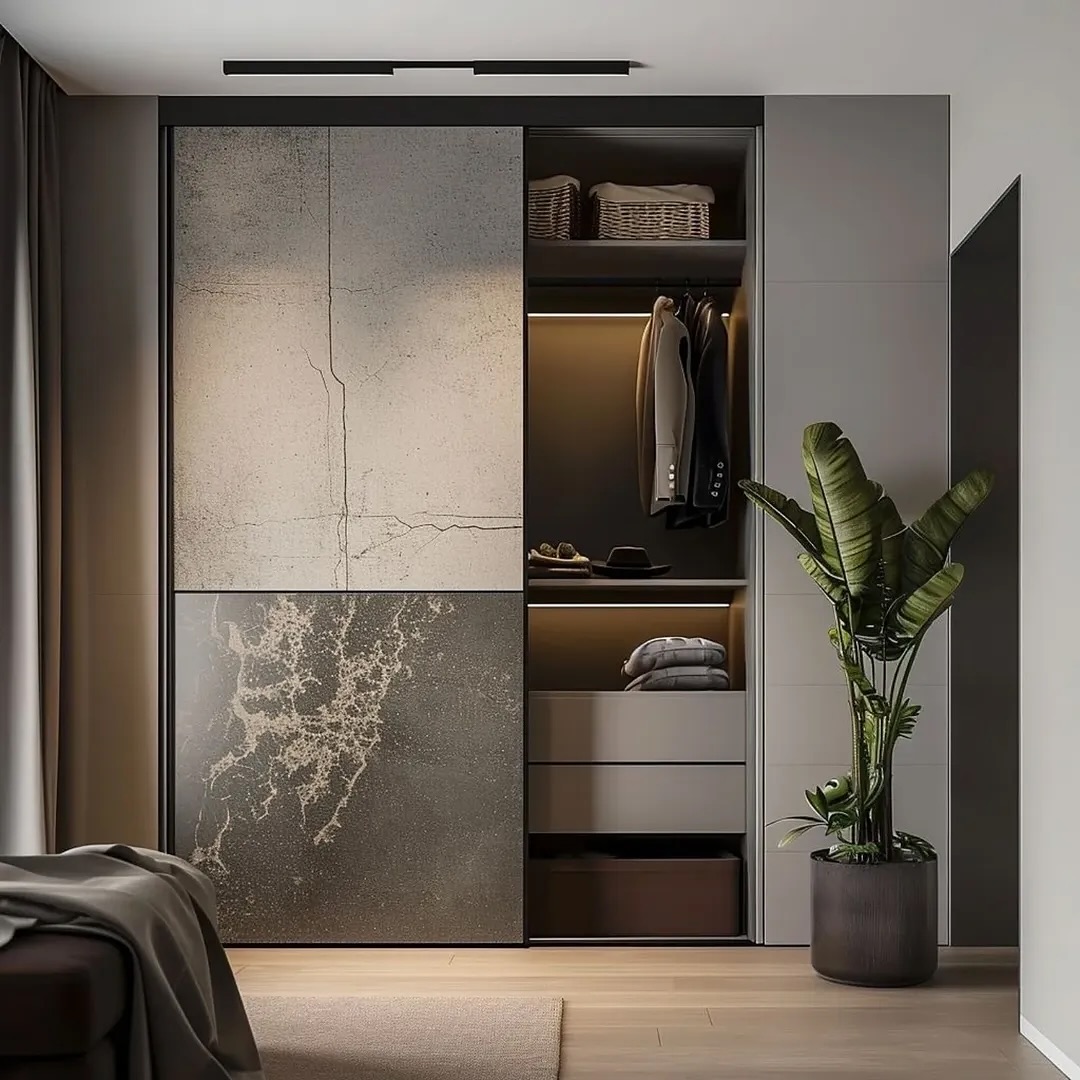
Sliding vs Hinged Wardrobes: How to Choose the Right Format
Both formats can look premium, but they solve different problems. Here's how we help clients choose between space-saving sliders and classic hinged shutters.
False Ceiling
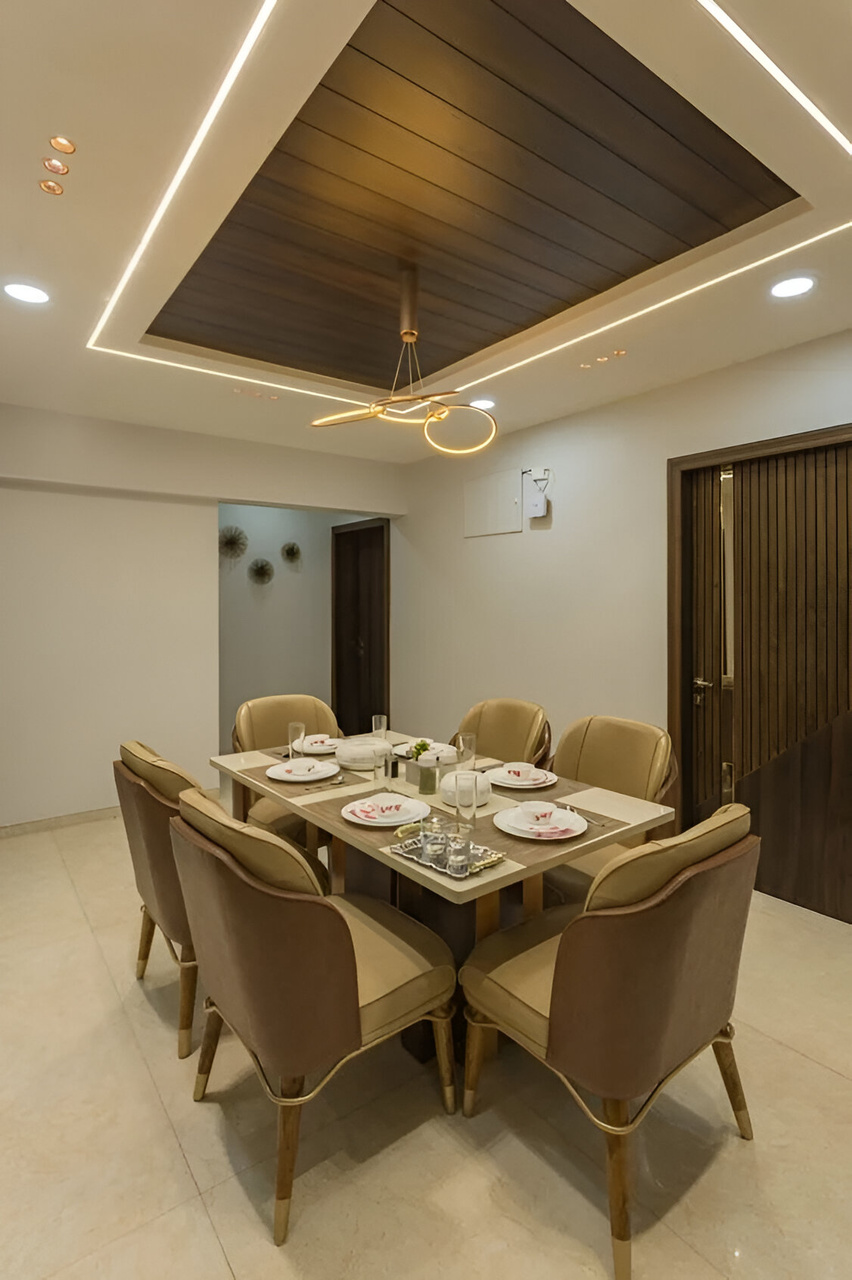
Lighting Layers That Change the Mood of Every Interior
Lighting is not an accessory. It is the layer that ties the entire room together, from ceiling detailing to shelves, niches, and display corners.
Modular Kitchen
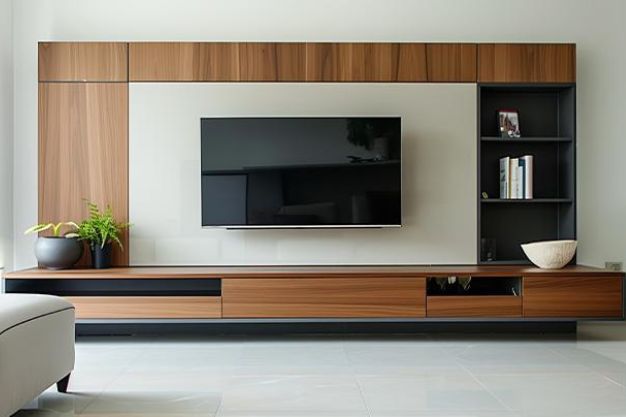
A Modular Kitchen Layout That Supports Daily Flow
From cooking routines to storage zones, a good modular kitchen is designed around how you actually move through the space every day.